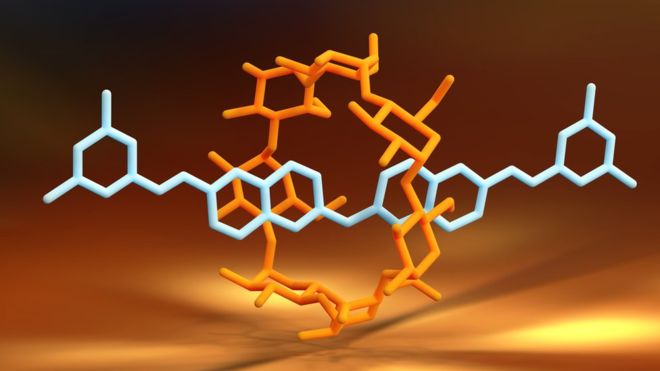
บีบีซีรายงานวันที่ 5 ต.ค. ว่า คณะกรรมการรางวัลโนเบลสาขาเคมีประกาศผลผู้ชนะรางวัลประจำปีนี้ ได้แก่ นายฌอง-ปิแอร์ โซวาจ จากฝรั่งเศส นายเจ. เฟรเซอร์ สตอดดาร์ต จากสหราชอาณาจักรและนายเบอร์นาร์ด เฟริงกา จากเนเธอร์แลนด์ จากผลงานพัฒนาเครื่องจักรโมเลกุล เป็นเครื่องจักรขนาดเล็กที่สุดในโลก บางกว่าเส้นผม 1,000 เท่า แต่แข็งแรงพอจะเคลื่อนวัตถุที่ใหญ่กว่าตัวของมัน 10,000 เท่า
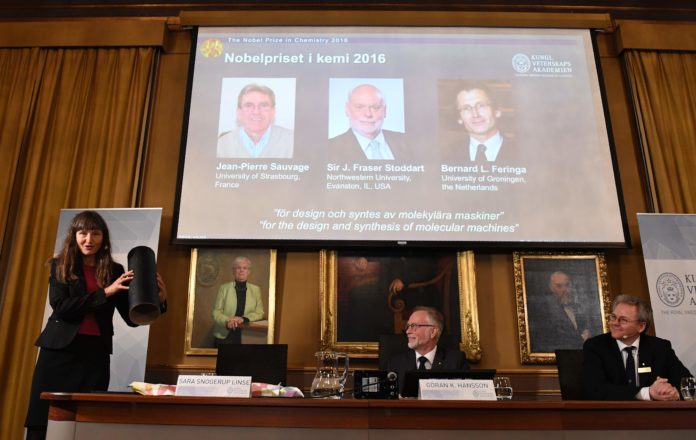
Winners of the 2016 Nobel Chemistry Prize (Up L-R) Jean-Pierre Sauvage, J Fraser Stoddart and Bernard L Feringa are seen on display as (Bottom L-R) Professor of Physical Chemistry and Chairman of the Nobel Committee for Chemistry, Sara Snogerup Linse, Permanent Secretary of the Royal Swedish Academy of Sciences, Goran K Hansson, and Professor Olof Ramstrom react during the official announcement of the 2016 Nobel Chemistry Prize winners at the Royal Swedish Academy of Sciences in Stockholm on October 5, 2016. The / AFP PHOTO / JONATHAN NACKSTRAND

งานแถลงข่าวประกาศรางวัลที่กรุงสตอกโฮล์ม ประเทศสวีเดน / AFP PHOTO / JONATHAN NACKSTRAND

ด้วยตระหนักถึงความสำเร็จในการเชื่อมโยงโมเลกุลเข้าด้วยกันเพื่อออกแบบทุกสิ่งจากเครื่องจักรและกล้ามเนื้อให้มีขนาดจิ๋ว พัฒนาสิ่งต่างๆ ต่อไป เช่น วัสดุใหม่ๆ เซนเซอร์ ระบบสะสมพลังงาน ไปจนถึงการแพทย์ อาจทำให้เกิดการป้อนยาเข้าไปรักษาเซลล์มะเร็งได้โดยตรง กรรมการจึงมอบรางวัลทรงเกียรติแก่ทั้งสามนักวิจัยในครั้งนี้

สำหรับนายฌอง-ปิแอร์ โซวาจ ประจำอยู่มหาวิทยาลัยสตราสบูร์ก ประเทศฝรั่งเศส
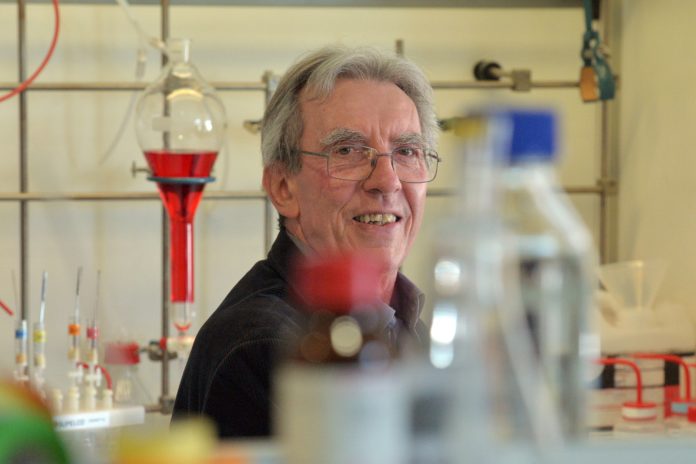
French scientist and Nobel prize winner Jean-Pierre Sauvage poses in his laboratory at the Science and Supramolecular Engineering Institute at the University of Strasbourg in eastern France on October 5, 2016. A trio of French, British and Dutch scientists won the Nobel Chemistry Prize for developing molecular machines, the world's smallest machines that may one day act as artificial muscles to power tiny robots or even prosthetic limbs. Jean-Pierre Sauvage of France, J Fraser Stoddart of Britain and Bernard Feringa of the Netherlands "have developed molecules with controllable movements, which can perform a task when energy is added," the jury said. / AFP PHOTO / PATRICK HERTZOG

Jean-Pierre Sauvage poses in his laboratory at the Science and Supramolecular Engineering Institute at the University of Strasbourg in France on October 5, 2016.. / AFP PHOTO

นายเจ. เฟรเซอร์ สตอดดาร์ตอยู่มหาวิทยาลัยนอร์ทเวสเทิร์นในอเมริกา
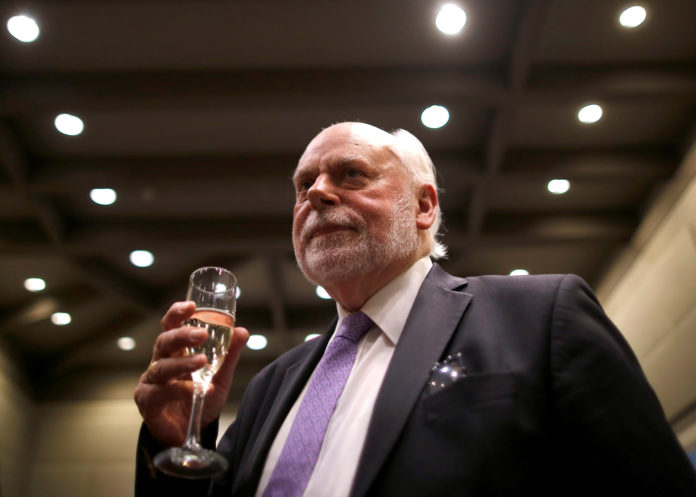
J. Fraser Stoddart, one of the winners of 2016 Nobel Prize for Chemistry, holds a glass of champagne after a news conference at Northwestern University in the Chicago suburb of Evanston, Illinois, U.S., October 5, 2016. REUTERS/Jim Young

J. Fraser Stoddart at Northwestern University in the Chicago suburb of Evanston, Illinois, U.S., October 5, 2016. REUTERS/Jim Young

และนายเฟริงกาอยู่มหาวิทยาลัยโครนิงเกน ในเนเธอร์แลนด์
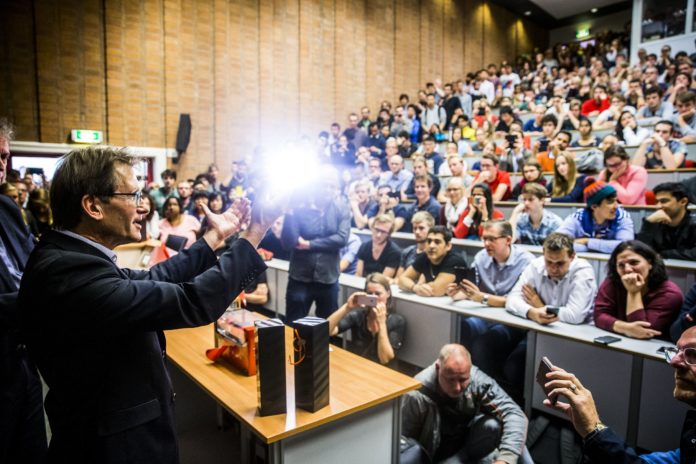
Dutch professor Bernard Feringa gestures at the Rijksuniversiteit of Groningen on October 5, 2016 after winning the 2016 Nobel Chemistry Prize. A trio of French, British and Dutch scientists won the Nobel Chemistry Prize on October 5, 2016 for developing molecular machines, the world's smallest machines that may one day act as artificial muscles to power tiny robots or even prosthetic limbs. Jean-Pierre Sauvage of France, J Fraser Stoddart of Britain and Bernard Feringa of the Netherlands "have developed molecules with controllable movements, which can perform a task when energy is added," the jury said. Feringa, a 65-year-old professor at the University of Groningen, told reporters at the Nobel press conference that the prizewinning research offered great opportunities for the future. / AFP PHOTO / ANP / Siese Veenstra / Netherlands OUT

Dutch professor Bernard Feringa gestures at the Rijksuniversiteit of Groningen on October 5, 2016 / AFP PHOTO

ทั้งสามจะได้รับรางวัลมูลค่าราว 32 ล้านบาท
 

ติดตามข่าวสด

ข่าวเด่นประจำวัน